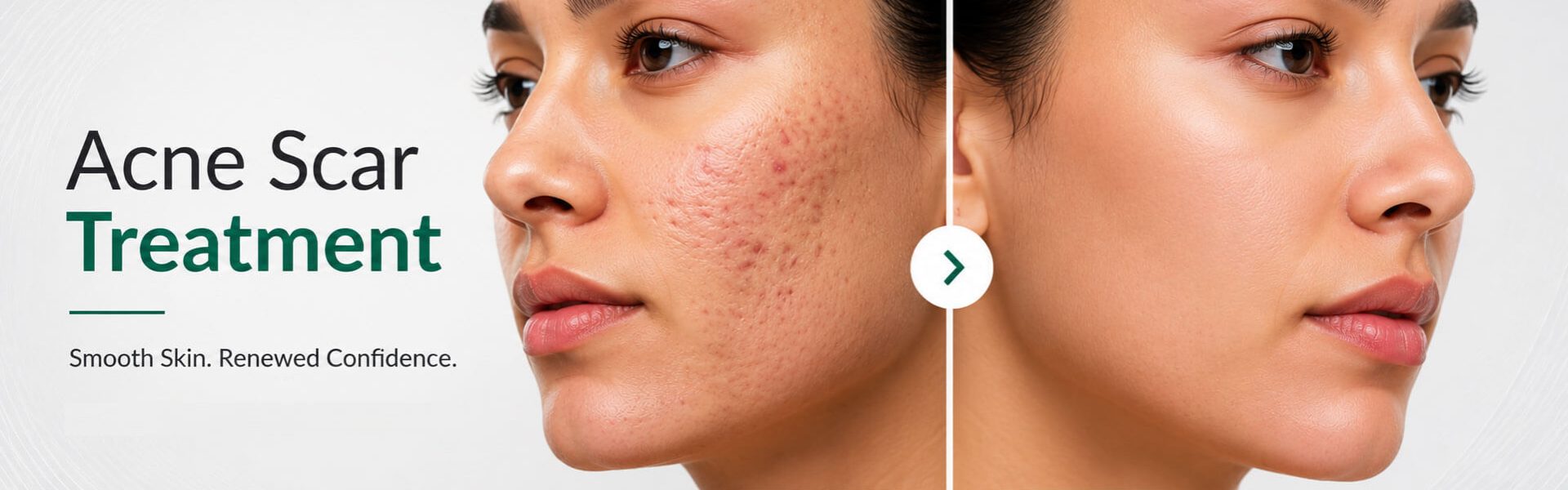
Acne Scar Treatment in Hyderabad
Acne goes away. The scars it leaves behind often don’t on their own. Pitted marks, uneven texture, and stubborn dark spots can stay on your skin for years, quietly affecting how you feel about yourself every day. At Kallos Skin and Hair Clinic in Sainikpuri, Hyderabad, our dermatologist uses clinically proven treatments — laser resurfacing, MNRF, microneedling, chemical peels, subcision, and PRP — chosen specifically for your scar type, skin tone, and how long you’ve had the scars. We are easily accessible from ECIL, AS Rao Nagar, Kapra, Neredmet, and Secunderabad.
Acne scar treatment cost in Hyderabad at Kallos starts from ₹3,000 per session, depending on the procedure and number of sessions required. You will receive a transparent cost estimate at your first consultation, no surprises, no hidden fees.
Why Acne Scars Don't Heal on Their Own
When active acne, especially deep, inflamed cysts or nodules damages the skin, the body rushes to repair it by producing collagen. But this repair process is imperfect. If too little collagen is produced, the skin heals with depression a pitted or atrophic scar. If too much is produced, it heals a hypertrophic or keloid scar. Either way, the result is a permanent structural change inside the dermis, the deep layer of skin beneath the surface.
This is the reason no cream, serum, or home remedy can remove acne scars. These products work only on the epidermis, the top skin layer. They cannot penetrate the dermis, where the scar tissue actually lives. Clinical treatments like MNRF and fractional laser are specifically designed to reach the dermis, trigger fresh collagen remodelling, and physically reduce scar depth from the inside out.
Types of Acne Scars — and What Each One Needs
Different scars form through different mechanisms. Treating a rolling scar the same way you’d treat an ice pick scar will give poor results. At Kallos, your dermatologist identifies your exact scar profile before recommending any treatment.
| Scar Type | How It Looks | What Causes It | Best Treatment at Kallos |
|---|---|---|---|
| Ice pick scars | Deep, narrow holes — like the skin was pierced | Inflamed cyst contents destroy follicle wall tissue | TCA CROSS + Fractional CO₂ Laser |
| Boxcar scars | Wide, shallow-to-medium depressions with defined edges | Loss of collagen in a localised area | Fractional Laser + MNRF |
| Rolling scars | Wavy, uneven skin — shadows visible under light | Fibrous bands tethering skin to deeper tissue | Subcision + PRP + MNRF |
| Hypertrophic / Keloid | Raised, thickened, sometimes itchy scar tissue | Excessive collagen production during healing | Intralesional Steroid + Laser Resurfacing |
| Post-Inflammatory Marks (PIH) | Flat brown or reddish patches — no texture change | Excess melanin triggered by inflammation | Chemical Peels + Nd:YAG Laser |
Most patients who visit us don’t have just one type they come in with a mix. For example, ice picks scars on the cheeks, rolling scars on the temples, and flat brown marks across the forehead. In those cases, a combination treatment plan is designed in a specific sequence to address each scar type efficiently without over-treating the skin.
Does Scar Age Matter? Old Scars vs Fresh Scars
One question we frequently hear at our Sainikpuri clinic: “My scars are from 5 years ago. Is it too late?” The honest answer: it is never too late to treat acne scars, but the approach changes based on how old your scars are.
| Scar Age | What's Happening in the Skin | What Causes ItTreatment Approach |
|---|---|---|
| Under 1 year (fresh scars) | Scar tissue still forming, collagen still remodelling naturally | Gentle interventions first — peels, microneedling, PRP — to guide healthy healing |
| 1–5 years | Scar tissue stabilised, dermis fully restructured | Active collagen remodelling — MNRF, fractional laser most effective at this stage |
| 5+ years (old scars) | Dense, fibrous scar tissue — harder to break down | Multi-session combination protocols — subcision to release tethering, then laser + PRP to rebuild |
Old scars typically need more sessions and a more staged approach — but they do respond to treatment. Many of our most satisfying results at Kallos have been with patients who had scars for 8–10 years and had given up hope after failed home treatments.
Acne Scar Treatments Available at Kallos

MNRF — Microneedling Radio Frequency
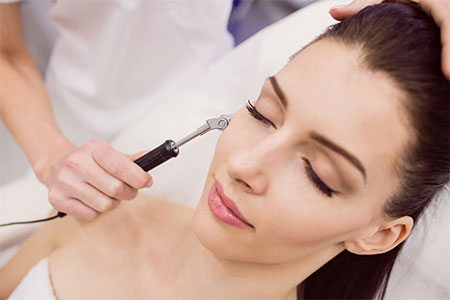
MNRF is currently one of the most effective treatments for atrophic acne scars, and a particular strength of our clinic. Tiny insulated needles are inserted into the dermis and deliver radiofrequency energy directly at the scar level — triggering collagen and elastin production without heating the skin surface. This makes it exceptionally safe for Indian skin tones, with virtually no risk of post-treatment darkening. Most patients see meaningful improvement in scar depth after 3–4 sessions, with results continuing to improve for up to 6 months as new collagen matures.
Fractional CO₂ Laser
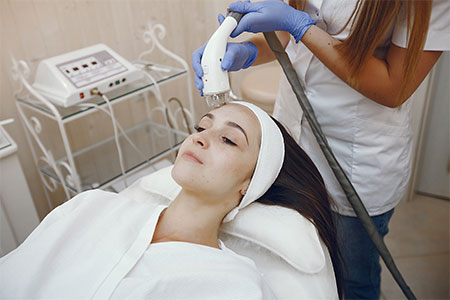
For moderate to severe pitted scars particularly ice pick and deep boxcar scars fractional CO₂ laser delivers precision thermal energy across thousands of microscopic zones in the skin. Each zone triggers a wound-healing response that produces fresh, organised collagen, progressively lifting scar depth. Patients typically see 50–70% reduction in scar visibility after a full course of 3–5 sessions. All laser parameters at Kallos are adjusted for your Fitzpatrick skin type before the procedure begins.
Subcision
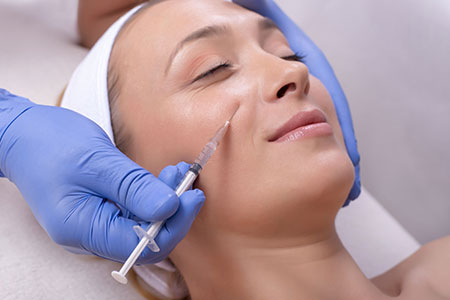
Rolling scars are tethered to deeper tissue by fibrous bands — no laser can fix this. Subcision uses a fine needle, inserted under the skin, to physically cut these bands and release the scar from the inside. Once the tethering is released, the skin surface can rise and PRP or filler can be added in the same session to support collagen rebuilding. This is the only effective treatment for true rolling scars — and most clinics skip it in favour of easier procedures.

Chemical Peels — TCA & Customised Formulas
Medical-grade chemical peels at Kallos are tailored to your scar type and skin tone — not a one-formula-fits-all approach. For ice pick scars, TCA CROSS (focally applied trichloroacetic acid) is used. For surface-level pigmentation and shallow scarring, glycolic or salicylic acid peels in calibrated concentrations are used. Sessions take 20–30 minutes and require 3–5 days of mild peeling post-treatment.
PRP Therapy — Platelet Rich Plasma
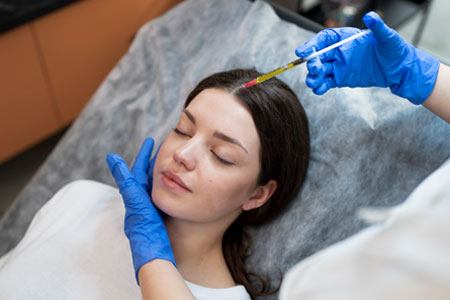
Your own blood is drawn, spun to concentrate the growth factors, and re-injected into scarred areas. PRP accelerates collagen production and skin regeneration, making it a powerful add-on to laser or MNRF sessions. Used alone, it works best for fresh scars and post-acne redness. Used in combination, it significantly enhances the results of any other treatment.
Dermal Fillers
For patients who want immediate visible improvement particularly in atrophic boxcar scars hyaluronic acid fillers physically lift the base of the depression, providing instant correction. Results last 9–18 months. Fillers are typically used as a bridge treatment while laser or MNRF sessions produce the longer-term collagen remodelling.
How to Choose the Right Acne Scar Clinic in Hyderabad
Acne scar treatment is not a one-session procedure done by any technician. The quality of your results depends directly on the person performing the assessment and the treatment. Here is what to look for and ask before committing to any clinic in Hyderabad:
- Is the assessment done by a qualified dermatologist? Not a skin care advisor, not a beauty therapist or a dermatologist (MBBS + MD Dermatology or DVD/DVL) who can look at your scars under magnification and tell you exactly what scar types you have and why each treatment is being recommended.
- Do they offer combination protocols? No single treatment fixes all scar types. If a clinic recommends the same procedure for every patient, they are not assessing your skin, they are upselling a standard package.
- Are laser settings adjusted for your skin tone? Indian skin tones need lower fluence settings and specific wavelengths to avoid post-treatment hyperpigmentation. Ask this directly before any laser session.
- Is the pricing transparent before you start? You should receive a written estimate of total sessions and cost at your first consultation — not after you’re already mid-way through a course.
- Do they show real patient results? Ask to see before-and-after photos from patients with similar scar types and skin tones not stock images.
Which Treatment Is Right for Your Skin?
Your skin tone, scar type, scar age, and severity all factor into the right treatment choice. The table below is a general guide your dermatologist will confirm the exact plan after examining your scars.
| Your Profile | Recommended Path at Kallos | Approx. Sessions |
|---|---|---|
| Mild marks, any skin tone | Chemical Peel + Microneedling | 4–6 |
| Moderate pitted scars, dark skin tone | MNRF + PRP (laser-free option) | 4–6 |
| Moderate pitted scars, medium skin tone | Fractional CO₂ Laser + Microneedling | 3–5 |
| Deep / severe ice pick scars | TCA CROSS → Fractional Laser → PRP | 5–8 |
| Rolling scars | Subcision → MNRF → PRP | 4–6 |
| Old scars (5+ years) | Multi-modality staged protocol | 6–10 |
| Active acne + existing scars | Acne control first, then scar correction | Staged plan |
| Flat pigmented marks only | Chemical Peels + Nd:YAG Laser | 3–5 |
Treatment Process — What Happens at Kallos
- Step 1 — Detailed consultation: Your dermatologist examines each scar under magnification, identifies the type, depth, and age of scarring, and maps your skin tone. A written treatment plan is prepared including which treatments, in which sequence, how many sessions, and the total estimated cost. No procedure starts without your full understanding and consent.
- Step 2 — Skin preparation: The treatment area is thoroughly cleaned and a topical numbing cream is applied 20–30 minutes before the session begins, ensuring minimal discomfort throughout.
- Step 3 — Treatment session: Each session takes 30–60 minutes depending on the procedure. All treatments at Kallos are performed by a qualified dermatologist — not a junior technician.
- Step 4 — Aftercare and follow-up: You receive written aftercare instructions after every session. Mild redness or swelling for 1–3 days is normal. SPF 50+ mineral sunscreen daily is essential — Hyderabad’s high UV index makes sun protection critical after any laser or MNRF treatment to prevent pigmentation. Our team is available for follow-up queries between sessions.
Acne Scar Treatment Cost in Hyderabad — Kallos Clinic
Acne scar treatment cost in Hyderabad at Kallos Skin and Hair Clinic starts from ₹3,000 per session. The exact cost depends on the procedure, the area being treated, and the number of sessions in your plan. All costs are discussed upfront at your consultation — you will know the full investment before starting.
| Treatment | Cost Per Session | Typical Sessions | Best For |
|---|---|---|---|
| Chemical Peel | ₹3,000 – ₹6,000 | 4–6 | Surface marks, PIH, mild scars |
| Microneedling | ₹5,000 – ₹8,000 | 4–6 | Mild-moderate atrophic scars |
| Nd:YAG Laser | ₹5,000 – ₹10,000 | 4–6 | Pigmentation, dark marks |
| MNRF | ₹6,000 – ₹12,000 | 4–6 | All scar types, safest for dark skin |
| Fractional CO₂ Laser | ₹8,000 – ₹15,000 | 3–5 | Moderate to severe pitted scars |
| PRP Therapy | ₹6,000 – ₹10,000 | 3–4 | Healing boost, best combined |
| Subcision | ₹8,000 – ₹12,000 | 2–4 | Rolling scars specifically |
| Dermal Fillers | ₹10,000 – ₹20,000 | 1–2 | Immediate correction of depressions |
EMI options and multi-session package pricing available. Ask at the consultation.
Serving Sainikpuri, ECIL, AS Rao Nagar, Kapra & Secunderabad
Kallos Skin and Hair Clinic is located in Sainikpuri, one of the most accessible areas of East Hyderabad for patients coming from ECIL, AS Rao Nagar, Neredmet, Kapra, Moulali, Alwal, and Secunderabad. We offer early morning and evening slots so working patients don’t have to rearrange their day for a consultation or treatment session.
Why Patients Choose Kallos for Acne Scar Treatment
- Dermatologist-performed: Every session is performed or directly supervised by a qualified dermatologist — not a junior technician. Your skin doesn’t get a learning curve.
- Indian skin expertise: All laser settings and treatment protocols are calibrated for Indian skin tones. We specifically screen for PIH risk before any laser procedure and adjust accordingly.
- Combination treatment protocols: Most patients have multiple scar types. We design multi-modality plans that address all of them in a logical sequence — not a single treatment repeated.
- Transparent cost: You receive a written breakdown of sessions and estimated cost before your first treatment. No upselling mid-course.
- Accessible location: Centrally located in Sainikpuri, serving all of East Hyderabad including ECIL, AS Rao Nagar, and Kapra.
Start Your Treatment — Book a Consultation at Kallos, Sainikpuri
Frequently Asked Questions — Acne Scar Treatment in Hyderabad
Initial improvement in skin texture is typically visible within 3–4 weeks of the first session. Full results develop over 2–4 months as new collagen matures. With combination treatments, most patients see significant change after 2–3 sessions — though the final outcome continues improving for up to 6 months after the last session.
Discomfort is minimal. A topical numbing cream is applied 20–30 minutes before every procedure. During MNRF and laser sessions, most patients feel mild warmth or a tingling sensation. Subcision may cause slight pressure. Pain levels are consistently rated as manageable by our patients — you will be in full control throughout the session.
The number depends on your scar type, severity, and the treatment being used. A general guide: mild scars typically need 4–6 sessions; moderate scars 4–6 sessions; severe or complex scarring 6–10 sessions. Your dermatologist will give you a specific count after the first consultation we don't give estimates before examining your skin.
The collagen remodelling achieved through MNRF and fractional laser is permanent treated scars do not return. However, new scars can form if active acne is not properly controlled. This is why we always address active acne management as part of the overall plan, not just the existing scars.
Yes when performed by someone with the right expertise and the correct laser settings. Indian skin (Fitzpatrick III–V) responds differently to laser energy than lighter skin tones and carries a higher risk of post-inflammatory hyperpigmentation if the wrong settings are used. At Kallos, laser parameters are always adjusted for your specific skin tone before any session begins.
At Kallos, treatment starts from ₹3,000 per session for chemical peels, up to ₹15,000 per session for fractional CO₂ laser. Most patients invest ₹20,000–₹60,000 for a complete treatment course, depending on scar severity and treatment combination. See the cost table above for a detailed per-treatment breakdown. Package pricing and EMI options are available.
Yes — always. Performing scar treatments over active, inflamed acne can worsen skin damage and create new marks. A 4–8 week active acne control phase using appropriate prescription treatment is recommended before scar correction begins. If you have both concerns, our dermatologist will design a staged plan addressing both in the right sequence.
Yes. There is no expiry date on acne scar treatment. Older scars have denser, more fibrous scar tissue — which means more sessions and a more staged approach — but they respond well to combination protocols including subcision, MNRF, and fractional laser. Some of our best results have been with patients who had scars for over a decade.
Patients who haven't seen results elsewhere have often received a single treatment type that didn't match their scar profile, or had treatments performed by technicians without proper skin assessment. At your consultation, our dermatologist will review your scar history, identify what hasn't worked and why, and build a plan that accounts for it. A fresh, properly assessed approach often produces results where previous treatments failed.